You are involved in every part of the city.
Most city builders let you paint zones and watch the numbers. The City hands you the details: who lives where, what the road rules are, where the patrol car waits and what a semester costs.
The short version
How The City handles the things a typical city builder runs for you.
| A typical city builder | The City | |
|---|---|---|
| Residents | A population count. | Every resident has a name, age, address, job, education, savings, commute and happiness. Click anyone to read their profile. |
| Growth | Driven by demand bars. | Driven by happiness. A happy city builds faster; below 38% nothing is built and people leave. |
| Police | A coverage circle. | Patrol cars that pull drivers over, write tickets and clear crashes. You write the rules, set the fines and post patrols. |
| Education | One building per level. | Three school levels, a public college and a private university you assemble from ten kinds of campus building. You set the tuition. |
| Everyday needs | Covered by commercial zones. | People want a bank, grocery store, gym and gas station near home. You place them where they are needed. |
| Parking | Cars vanish into buildings. | Every car parks in a lot, a garage or at the kerb. Garages have a price, and drivers complain when it is too high. |
| Services | Work once placed. | Need staff drawn from your residents. Below half staff, a service stops working. |
| Money | A tax slider or two. | Taxes for each zone, plus power and water bills, school fees, tuition, hospital charges, bus fares, parking and ticket prices. |
| Roads | Often tied to a grid. | Any angle, straight or curved, with your own stop, yield and no-U-turn signs. |
People, not population
Residents are out in the world. They travel between home, work, school and the shops, and you can follow any of them.
- They strive. An unhappy resident looks for a job, a better job or a nicer home, and saves up to get it.
- They remember. Every traffic ticket stays on a citizen's profile, with what it was for.
- They speak up. The City Feed carries their complaints, praise and help-wanted ads.
- They age. People fall ill, grow old and die, so the city needs hospitals, funeral homes and a cemetery.
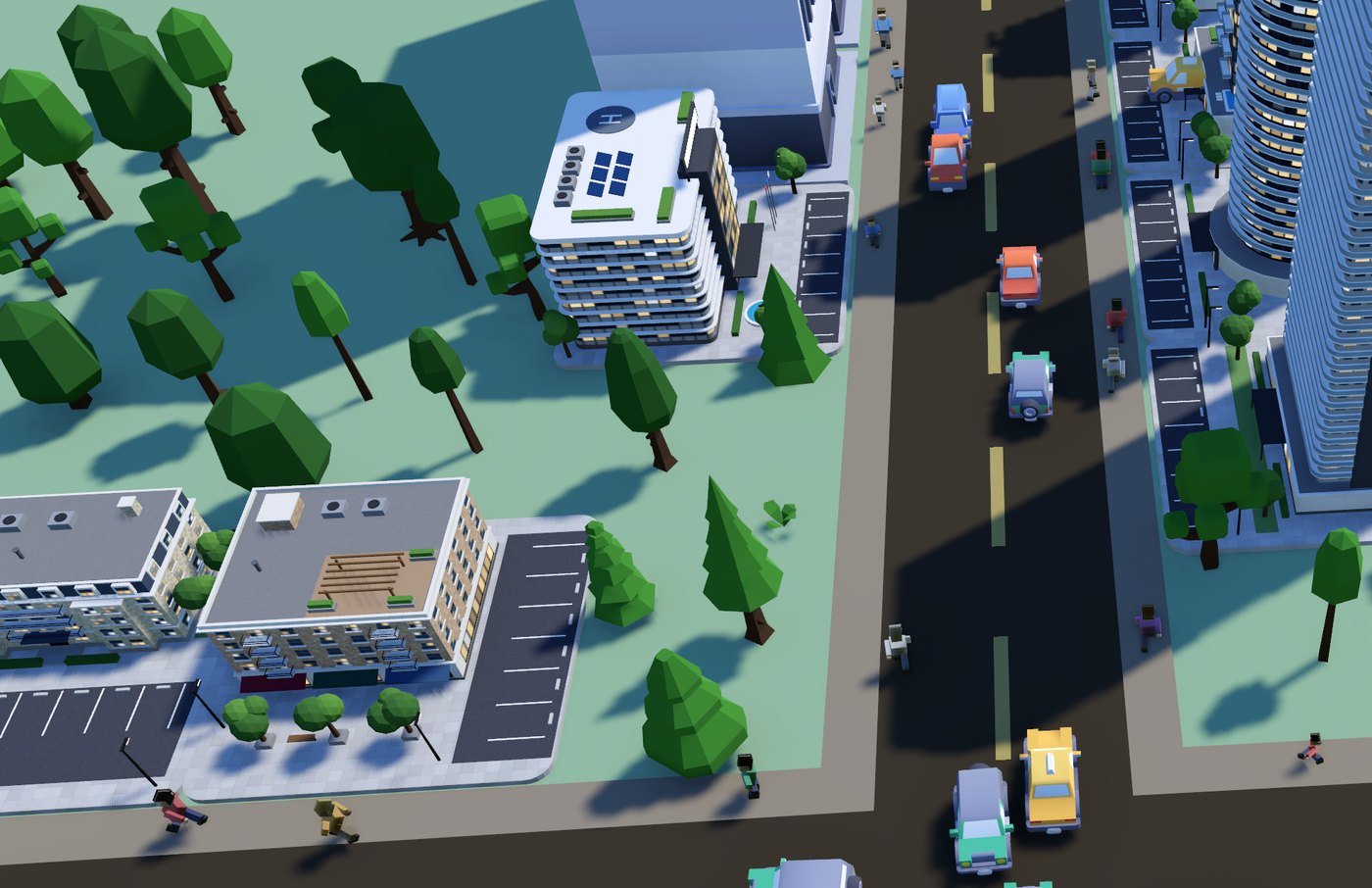
A police force you actually run
Police cars patrol the streets their station covers. When one sees a driver break a rule, the lights go on and both cars pull to the side of the road.
- Mayor's office: every road rule has a switch and a fine you set.
- Request patrol: click a junction to post a car there for a while.
- Crashes: the road stays blocked until the police have been.
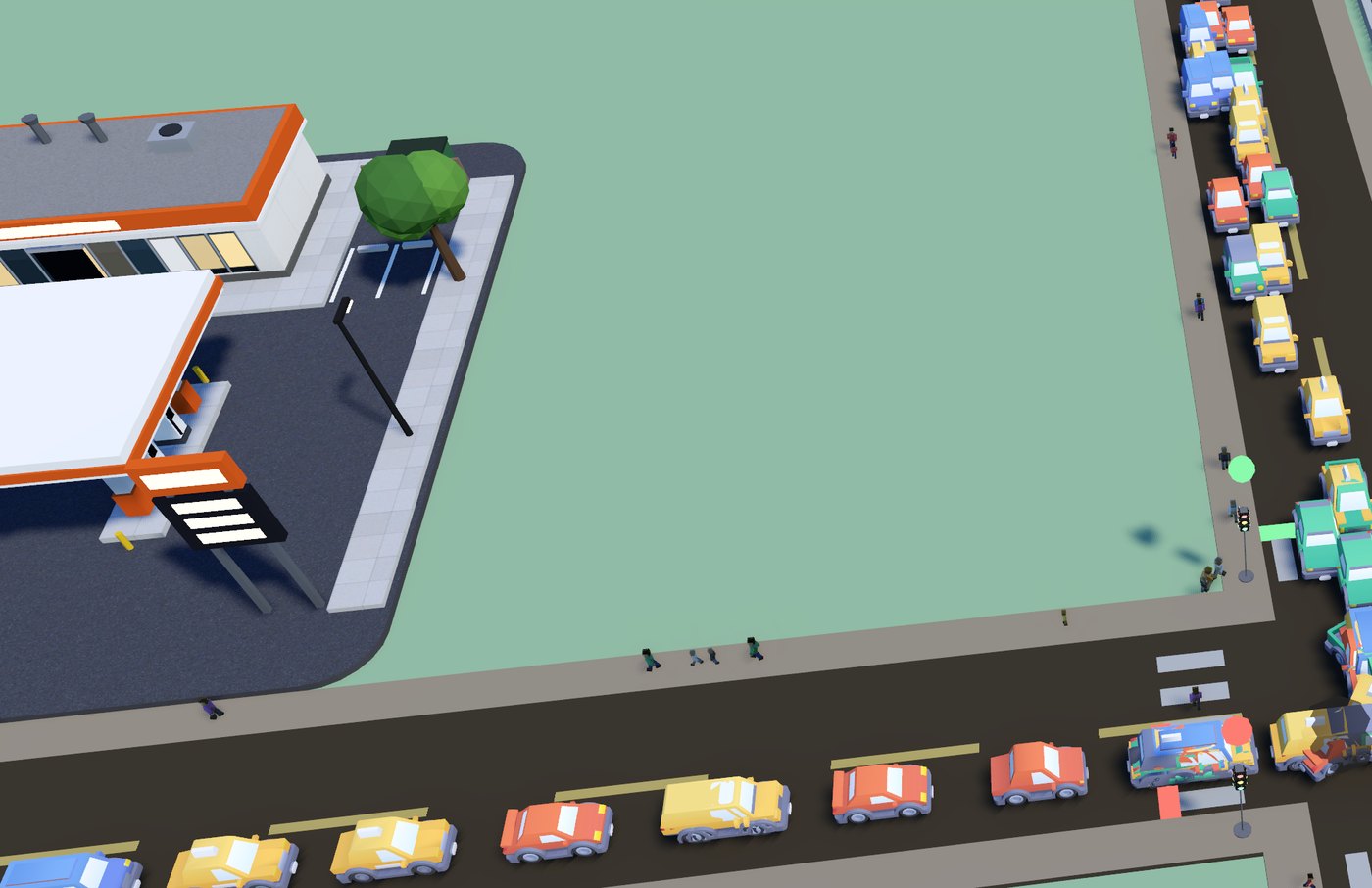
A university you build hall by hall
Education is a chain you manage from the first elementary school to the last lecture hall, and it feeds straight into your economy.
- Two paths: a cheap public college or a private university where you set the tuition.
- Ten campus buildings: each one adds places to any college or university within 20 blocks.
- The payoff: offices want people with a diploma or a degree.
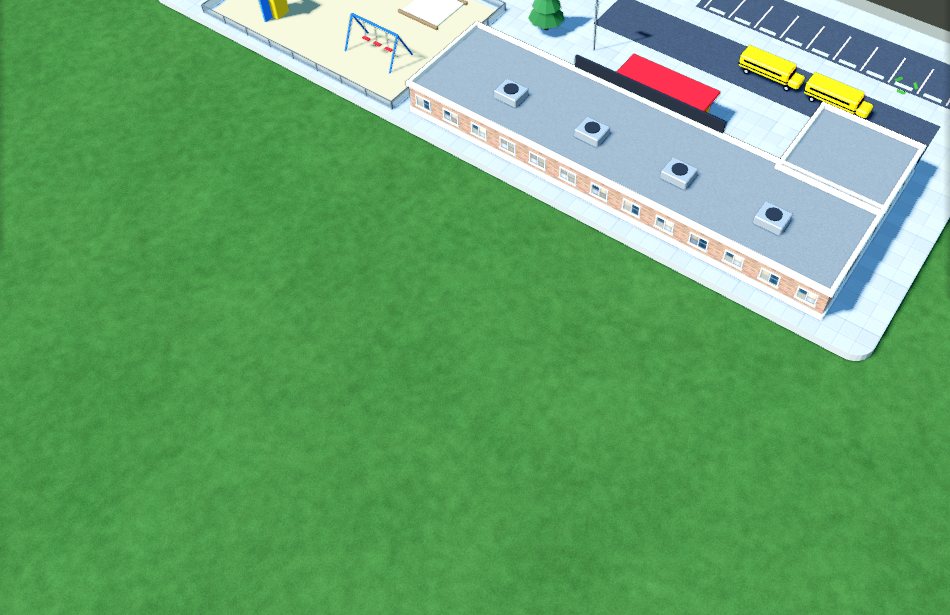
Details you decide
A few more places where the choice is yours.
Garage prices
Click a garage to set its price and see what it earned today, in 7 days and in 30 days.
Ticket prices
Stadiums, cinemas and other attractions charge what you say. Dearer tickets bring fewer visitors.
Ride-hailing
With no bus nearby, people without a car hail a black car. The city takes a licence fee, or you can switch it off.
Farms and resources
Fields, orchards, dairies, a coal mine and oil fields each need workers and sell what they make every day.
Lot sizes
Seven lot sizes, from a quarter lot beside a junction to an airport eight lots wide and four deep.
Your stadium
A stadium is named when you build it, along with its football team.
See for yourself
The City is coming to Steam Early Access.
Coming to Steam